


National Geographic 2000 April
Publisher: National Geographic
Format: Paperback
ISBN: none
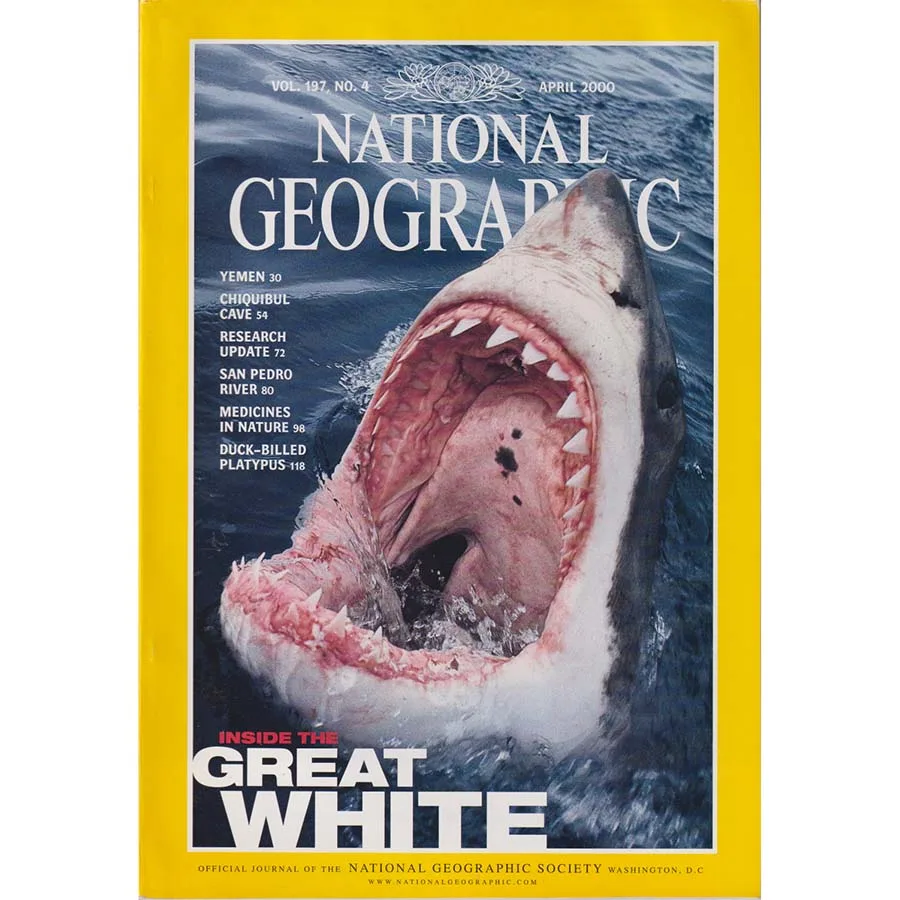
National Geographic – April 2000 is the issue that doesn’t so much invite you to read as lunge at you from the coffee table. The cover is a great white shark mid-yawn (mid-existential scream?), a pink cathedral of teeth and intention, politely captioned INSIDE THE GREAT WHITE as if this is a normal thing to do with your afternoon. You can almost hear the magazine saying, “Relax. This is education.”
And to be fair, it is. This is peak turn-of-the-millennium Nat Geo: big, glossy, confident, and utterly convinced that the best way to make you appreciate nature is to show you something that could remove a limb and then provide a calm, measured sidebar about migration patterns. It’s a masterclass in fear, but with captions. You come for the adrenaline; you stay for the quiet humiliation of realising the shark isn’t a villain, just an exquisitely engineered fish doing fish admin.
The joy of this issue is the whiplash. One moment you’re staring into a mouth the size of a small sofa, the next you notice the tidy little list on the left—Yemen, Chiquibul Cave, San Pedro River, Medicines in Nature, and, because National Geographic never misses a chance to flex its range, the duck-billed platypus. That’s right: from “apex predator with a dental plan” to “semi-aquatic mammal that looks like it was designed as a prank.” April 2000 is basically the planet’s mood swings in magazine form.
There’s also something wonderfully “2000” about it: that last era where information arrived as a physical object you could open flat, get a slight sheen on your fingertips, and feel faintly virtuous about because it wasn’t a screen. The photographs don’t scroll past—they sit there and demand you look properly. The writing has that classic Nat Geo tone: generous, curious, faintly reverent, and occasionally so earnest you can practically see the khaki shorts.
Condition: Good, which is exactly what you want from Crappy Old Books: a copy that’s been read, handled, maybe taken on holiday, and rescued from the great landfill of forgotten subscriptions. It’s the kind of magazine that still works as a time capsule, a wildlife documentary, and a low-level jump scare—depending on how suddenly you notice that cover again at 2am.
Keep browsing: See more National Geographic books Other books by National Geographic
